During World War II
Chaim’s Camp Survival
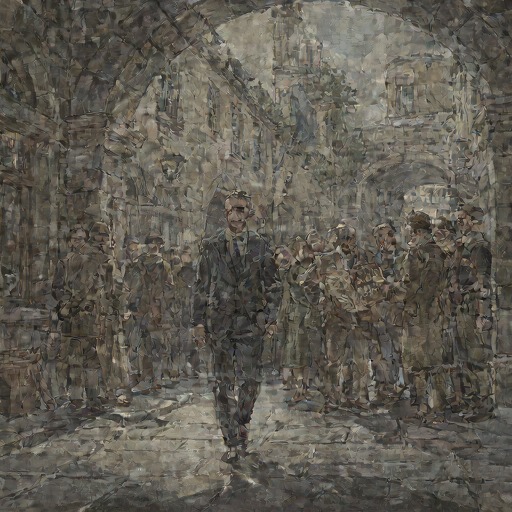
[Chaim Lerner](entity:character-recall-character-chaim-lerner-60493b9aa0ee) escaped into the forest early in the war but was eventually imprisoned at [Auschwitz concentration camp](entity:object-recall-object-auschwitz-concentratio-6160745f3c39). His chemistry training and German fluency helped him survive, as did the hard instincts demanded by the camp.
During Chaim’s imprisonment at Auschwitz
The Question of Why
When a guard crushed an icicle Chaim hoped to suck for relief from thirst, Chaim asked why. The guard answered, “Here there is no why,” a phrase that would become central to Chaim’s way of thinking about evil and suffering.
During the Holocaust
Chaim’s Reprieves
Amid the camp’s brutality, Chaim remembered small reprieves: a piece of apple, a glimpse of a woman’s bare ankle, moments when beauty and life remained perceptible. Those memories later shaped his insistence that horror did not erase every source of meaning.
1953
Zehava Leaves Kansas
[Zehava Lerner](entity:character-recall-character-zehava-lerner-0acf0cb29132) left Kansas City for [Israel](entity:location-recall-location-israel-ecf64b6f6a44) as a teenager, seeking a life beyond what she regarded as American mediocrity and a refuge in a world she believed remained hostile to Jews after the [Holocaust](entity:event-recall-event-holocaust-5f8329a01c22). Her commitment to the new country would become inseparable from her political life.
In the 1950s
Chaim and Zehava Meet
At [Hebrew University](entity:location-recall-location-1feef835b21f), [Zehava](entity:character-recall-character-zehava-ef40c2943f24) became Chaim’s student assistant and fell in love with the charismatic professor. They married and built a family, while Zehava developed a public career in Israeli politics.
After Chaim and Zehava’s marriage
Yoav’s Childhood
Chaim and [Zehava](entity:character-recall-character-zehava-ef40c2943f24) raised their only child, [Yoav](entity:character-recall-character-yoav-6377cfe79f42), in a household shaped by Chaim’s scholarship and Zehava’s growing political commitments. [Michal](entity:character-recall-character-michal-298ba6e2596f), whose family was close to theirs, became a regular presence and grew up alongside Yoav.
When Yoav was about eight
Chaim’s Nightmares
Years into the marriage, Chaim began having recurring nightmares about Nazi pursuers and waking in terror. Medication eased the dreams but left him groggy and irritable; in time, his anger turned into insults and physical abuse directed at [Zehava](entity:character-recall-character-zehava-ef40c2943f24) and [Yoav](entity:character-recall-character-yoav-6377cfe79f42).
After Chaim’s treatment for nightmares
Chaim’s Changing Politics
As his treatment changed, Chaim became increasingly outspoken against Israeli policy, including the invasion of [Lebanon](entity:location-recall-location-c3d570f12ad0) and the occupation. [Zehava](entity:character-recall-character-zehava-ef40c2943f24), a committed Zionist and rising politician, found his unpublished attacks on [Israel](entity:location-recall-location-israel-ecf64b6f6a44) deeply painful even while accepting that political dissent was part of democracy.
In the years before May 1983
Chaim’s Student Affairs
Chaim began pursuing young women among his students, and his affairs became a recurring source of conflict at home. [Zehava](entity:character-recall-character-zehava-ef40c2943f24) eventually gave him an ultimatum: another affair would end their marriage and expose his conduct publicly.
Around 1970
The Schiller Letter
Chaim’s former civilian supervisor at [Buna](entity:location-recall-location-buna-a9d077a97cc6), Otto Schiller, invited him to [London](entity:location-recall-location-london-420923d4a60a) and asked to seek forgiveness for his conduct during the war. Chaim wrote a careful reply acknowledging Schiller’s restraint from physical abuse while refusing to grant forgiveness; before the letter could be sent, Schiller’s wife reported that he had died.
September 1982
Judah Arrives in Jerusalem
[Judah Loeb](entity:character-recall-character-judah-loeb-d64e672e02d7) arrived in [Jerusalem](entity:location-recall-location-jerusalem-8e4409a0f555) from [Northwestern University](entity:organization-recall-organization-northwestern-uni-de45bb7787d9) for a year of study, inexperienced with travel and drawn largely by the prospect of romance. At [Hebrew University](entity:location-recall-location-1feef835b21f), he noticed [Michal](entity:character-recall-character-michal-298ba6e2596f), an Israeli student whose ease across languages and cultures set her apart from the American student bubble.
September 1982
Theology’s Hard Question
In Chaim’s class on [Holocaust theology](entity:concept-recall-concept-holocaust-theology-1af25ff390e6), he laid out the conflict between an all-powerful God, a wholly good God, and the existence of evil. He rejected the easy claim that suffering was unreal or deserved, forcing Judah to encounter the terrifying question at the heart of Chaim’s work.
September 1982
Michal Chooses Judah
After class, [Michal](entity:character-recall-character-michal-298ba6e2596f) offered Judah a ride on her bicycle and bought him coffee. She explained that she had known Chaim for years and believed he could help Judah with his preoccupations about mortality, politics, divorce, and suicide.
September 1982
A Shabbat Invitation
[Michal](entity:character-recall-character-michal-298ba6e2596f) introduced Judah to Chaim and invited him to dinner at the Lerner home. There, Chaim proposed a “banality of goodness”: Judah’s ordinary American upbringing, with its modest problems and freedoms, represented the kind of unremarkable life in which goodness could take root.
September 1982
The Icicle Story
At dinner, Chaim recounted the moment a guard crushed his icicle and answered his question with “Here there is no why.” Judah understood that the phrase named the camp’s nihilism, but he could not yet tell whether it was an answer to suffering or an indictment of a world that made such suffering possible.
September 1982
The Lebanon Argument
Judah asked whether there was any explanation for the [Sabra and Shatila massacre](entity:action-recall-action-sabra-and-shatila-mass-9a8d6bef783b), prompting a fierce disagreement between Chaim and [Zehava](entity:character-recall-character-zehava-ef40c2943f24) over [Israel](entity:location-recall-location-israel-ecf64b6f6a44)’s responsibility. They revealed that [Yoav](entity:character-recall-character-yoav-6377cfe79f42) was serving in [Lebanon](entity:location-recall-location-c3d570f12ad0), making the war a family wound rather than an abstract political question.
Autumn 1982
Charlie’s Friendship
Judah’s roommate [Charlie](entity:character-recall-character-charlie-24c3a7bd9408), an American immigrant and former soldier, became his closest friend outside the Lerners. Charlie spoke about military service and the [Lebanon War](entity:time-recall-time-e2f1773f3429) with a firsthand familiarity that Judah, a sheltered visitor, could barely comprehend.
Late 1982
Chaim Recruits Judah
After a dinner conversation about religious and secular Jews blaming one another for the [Holocaust](entity:event-recall-event-holocaust-5f8329a01c22), Chaim asked Judah to help with his work toward reconciliation. Judah accepted the role of research assistant, though he initially expected mainly to carry books, manage appointments, and run errands.
Late 1982
God’s Names as Questions
Chaim brought Judah to a study session in the [Western Wall Tunnels](entity:location-recall-location-8ebd922f3ea2), where a discussion of the [Zohar](entity:object-recall-object-zohar-5236425664fc) treated “Who” and “What” as names of God and questions as a path toward spiritual understanding. Chaim provoked the group by asking whether “Why” should also be a divine name.
Late 1982
Kaplowitz Warns Judah
After the study session, [Rabbi Kaplowitz](entity:character-recall-character-rabbi-kaplowitz-9b64c94b6515) gripped Judah’s arm and warned him to be careful with Chaim. Judah did not understand the warning, but it stayed with him as he grew closer to his teacher and watched Chaim unsettle religious and political authorities.
November 1982
The First Night Together
On [Michal](entity:character-recall-character-michal-298ba6e2596f)’s birthday, Judah cooked an inedible fish dinner, and the two spent the night together in her childhood bed. Michal had told him she was saving sex for marriage; for the inexperienced Judah, the shared intimacy nevertheless felt like a defining step in their relationship.
Late 1982 to early 1983
Chaim’s Book Takes Shape
Chaim asked Judah to edit his manuscript in a direct, accessible style rather than an academic one. [Michal](entity:character-recall-character-michal-298ba6e2596f) also worked on the prose, cutting long sentences and adding sports metaphors; the collaboration became an early model for Judah’s own writing career.
After Our Imperfect God was published
The Disputation in Pisgat David
Chaim took his argument to an audience in Pisgat David, where he challenged settlers over the occupation and compared their project with Nazi ambitions. The crowd turned against him, but Chaim regarded the confrontation as the beginning of a necessary dialogue.
After the Pisgat David lecture
The Deputy Minister’s Demand
Meir Alon, then a government official, grabbed Judah and ordered him to stop Chaim. Chaim dismissed the warning as one more reaction to his provocations, but Judah remembered the encounter when Alon later emerged as a possible suspect in Chaim’s death.
During the 1982 Lebanon War
Yoav’s Shooting
In a Lebanese village, [Yoav](entity:character-recall-character-yoav-6377cfe79f42) heard an order to return fire and shot two boys he believed were armed fighters. He later learned they were ten-year-old children; the army investigated him, and the guilt of the deaths would haunt both him and his father.
Early 1983
Chaim’s War Condemnation
Chaim prepared to condemn the [Lebanon War](entity:time-recall-time-e2f1773f3429) publicly, despite having previously shielded his political views from public controversy. His stance sharpened the conflict with nationalists and government figures, while his private distress over the war grew alongside his worry about [Yoav](entity:character-recall-character-yoav-6377cfe79f42).
Early 1983
Chaim’s Orthodox Rebuke
At a gathering of Modern Orthodox rabbis, Chaim attacked their exclusion of non-Orthodox Jews and their explanations of the [Holocaust](entity:event-recall-event-holocaust-5f8329a01c22) as punishment or mystery. He argued that God was not all-powerful, making a theological claim that brought the audience’s initial warmth to an angry silence.
After the rabbis’ gathering
Kaplowitz’s Second Warning
[Rabbi Kaplowitz](entity:character-recall-character-rabbi-kaplowitz-9b64c94b6515) warned Chaim that if he continued to call God less than all-powerful, God might be forced to show His power. Chaim treated it as a theological provocation, while Judah recognized the threatening edge beneath the rabbi’s words.
Spring 1983
Judah’s Heartbreak
Judah learned that [Michal](entity:character-recall-character-michal-298ba6e2596f) was engaged to [Yoav](entity:character-recall-character-yoav-6377cfe79f42), her childhood love, and realized that their relationship had been a complicated refuge while Yoav was absent and injured. Michal explained that she loved both men but had chosen Yoav, leaving Judah devastated and alone in [Jerusalem](entity:location-recall-location-jerusalem-8e4409a0f555).
Spring 1983
Michal Explains Yoav’s Return
[Michal](entity:character-recall-character-michal-298ba6e2596f) told Judah that [Zehava](entity:character-recall-character-zehava-ef40c2943f24) had repeatedly urged her to visit [Yoav](entity:character-recall-character-yoav-6377cfe79f42) in the military hospital after his shooting of the boys. Seeing him helpless revived her love, and she decided to marry him despite the pain of ending her relationship with Judah.
Spring 1983
Chaim’s Advice to Suffer
After Judah’s breakup, Chaim comforted him and said he should allow suffering its place without letting it become all of life. He also suggested that Judah might leave [Israel](entity:location-recall-location-israel-ecf64b6f6a44), advice that could have been compassionate guidance or a way to spare him the painful situation around the Lerner family.
Three days before Judah left Israel in May 1983
The Final Night Together
Judah returned to [Michal](entity:character-recall-character-michal-298ba6e2596f) to say goodbye, and they had sex for the first time. She then told him [Yoav](entity:character-recall-character-yoav-6377cfe79f42) would arrive soon, and Judah left without the farewell he had hoped for, carrying the memory of their first and last night together.
May 5, 1983
Chaim Falls from the Balcony
On the night Judah was leaving [Israel](entity:location-recall-location-israel-ecf64b6f6a44), Chaim fell from the third-story balcony of his apartment and died. Judah arrived as an ambulance took the body away; [Michal](entity:character-recall-character-michal-298ba6e2596f) said Chaim had fallen, while [Zehava](entity:character-recall-character-zehava-ef40c2943f24) insisted he had jumped.
May 5, 1983
Michal’s Fatal Push
Years later, [Michal](entity:character-recall-character-michal-298ba6e2596f) revealed that Chaim had attacked her on the balcony after drawing her there under the pretense of apologizing. She shoved him away in self-defense; he struck the railing, lost his balance, and fell to his death.
May 5, 1983 and the following investigation
Zehava’s Cover Story
[Zehava](entity:character-recall-character-zehava-ef40c2943f24) helped conceal the circumstances of Chaim’s death and supported an account that left it classified as suicide. A later claim that she and [Michal](entity:character-recall-character-michal-298ba6e2596f) had been purchasing a wedding dress that evening rested on receipts and a supposed fitting, details Judah eventually found inconsistent.
1994
Mary’s Cancer Diagnosis
Judah noticed a breast lump in [Mary](entity:character-recall-character-mary-ea333e3cde9f) and pressed her to have it examined. Tests confirmed cancer; after surgery and chemotherapy, the couple took trips together and briefly enjoyed a freer, more adventurous period of their marriage.
1995
Mary’s Cancer Returns
[Mary](entity:character-recall-character-mary-ea333e3cde9f)’s cancer returned, and her medical knowledge made the worsening prognosis impossible to ignore. She withdrew from Judah and [Hannah](entity:character-recall-character-hannah-fb0714f3cb68), while [Ilana](entity:character-recall-character-ilana-6c0bbd5bc411) stepped in to help with the household and the care of the young child.
May 11, 1995
Mary’s Suicide
[Mary](entity:character-recall-character-mary-ea333e3cde9f) died by suicide after a final period in which she continued to appear energetic and engaged with life. Judah found her body after [Hannah](entity:character-recall-character-hannah-fb0714f3cb68) discovered it, then spiraled into grief and heavy drinking before [Ilana](entity:character-recall-character-ilana-6c0bbd5bc411) helped get him into rehabilitation.
May 11, 1995
Hannah Hides the Note
[Hannah](entity:character-recall-character-hannah-fb0714f3cb68) found [Mary](entity:character-recall-character-mary-ea333e3cde9f)’s brief note, addressed to both her and Judah, but kept it for herself. She was five and wanted to believe that the message belonged to her; as she grew older, shame and fear made the secret increasingly difficult to reveal.
After Mary’s death and during Judah’s recovery
Judah’s Five-Part Prayer
Judah revisited Chaim’s exercise of naming five desires and accepting that a limited God might grant only one. When Judah prayed for [Mary](entity:character-recall-character-mary-ea333e3cde9f) to recover, that wish overwhelmed all the others, and her death made the exercise feel like a cruel failure.
From the late 1990s into 2005
Judah’s Recovery and Career
After repeated rehabilitation, Judah became sober and returned to work as a journalist, eventually rebuilding his career. Years later, he found a new edition of Chaim’s book and wrote a proposal about the unresolved questions surrounding Chaim’s death.
June 2005
The Dylan Interviews Collapse
Judah’s planned book about [Bob Dylan](entity:character-recall-character-bob-dylan-9fc61e31150b) faltered when Dylan’s representatives repeatedly postponed the interviews he needed. His agent, [Stan](entity:character-recall-character-stan-1859942ca788), urged him to take the Lerner project instead, arguing that the renewed public interest would not last.
June 2005
Judah Chooses the Lerner Book
Judah accepted the assignment to investigate Chaim’s life and death, despite knowing that suicide was especially painful for his family. [Ilana](entity:character-recall-character-ilana-6c0bbd5bc411) agreed to care for [Hannah](entity:character-recall-character-hannah-fb0714f3cb68), but insisted that Judah speak honestly with his daughter about the project.
July 2005, before the flight
Hannah Joins the Trip
[Hannah](entity:character-recall-character-hannah-fb0714f3cb68) learned of the assignment and insisted on joining Judah in [Israel](entity:location-recall-location-israel-ecf64b6f6a44). She told him she was anti-Zionist but not antisemitic, and explained that she hoped to meet Palestinians for a school project about suicide bombings.
During the flight to Israel in July 2005
Hannah Questions Her Father
On the flight, Judah told [Hannah](entity:character-recall-character-hannah-fb0714f3cb68) that the book would examine Chaim’s death and his own time in [Jerusalem](entity:location-recall-location-jerusalem-8e4409a0f555). Hannah asked whether Judah had ever considered suicide; he answered no, while avoiding a deeper conversation about her mother.
During the drive from the airport in July 2005
Hannah’s Political Challenge
[Michal](entity:character-recall-character-michal-298ba6e2596f) drove Judah and [Hannah](entity:character-recall-character-hannah-fb0714f3cb68) toward [Jerusalem](entity:location-recall-location-jerusalem-8e4409a0f555), and Hannah challenged her account of [Israel](entity:location-recall-location-israel-ecf64b6f6a44)’s founding and the Palestinian displacement. Their argument ended in shared laughter, but it established the political and personal tensions that would run through the visit.
On arrival in Jerusalem in July 2005
The Balcony Inspection
Instead of first settling into their rental, [Hannah](entity:character-recall-character-hannah-fb0714f3cb68) insisted on seeing the balcony where Chaim died. She judged suicide unlikely because of his injured knee, then argued that the railing made an accidental fall impossible and concluded that Chaim had been murdered.
About ten years before Hannah interviewed him
Kamal’s Failed Attack
[Kamal](entity:character-recall-character-kamal-e03e860933f4) attempted to detonate a bomb at a restaurant in [Hod HaSharon](entity:location-recall-location-hod-hasharon-bb4d1fdd3cc5), hoping to avenge his family’s displacement and give his life significance. A soldier wrestled him away from the restaurant, but the device failed to explode, leaving Kamal alive and imprisoned.
July 2005
Hannah Interviews Kamal
With [Michal](entity:character-recall-character-michal-298ba6e2596f)’s help, [Hannah](entity:character-recall-character-hannah-fb0714f3cb68) interviewed [Kamal](entity:character-recall-character-kamal-e03e860933f4) in prison. He described revenge, money for his family, and above all a desire to make his life matter; he also insisted that his intended mass murder was not comparable to [Mary’s suicide](entity:action-recall-action-mary-s-suicide-c749d9d4f7df).
July 2005, shortly after Judah’s arrival
Charlie Reveals His Theory
[Charlie](entity:character-recall-character-charlie-24c3a7bd9408), now a homicide detective, told Judah that he believed Chaim had been murdered and began steering him toward possible suspects. He admitted that the family had alibis and pointed Judah toward political and religious figures who had opposed Chaim.
July 2005
Alon Admits His Hatred
At the Knesset, Meir Alon described his deep hatred of Chaim’s theology and his belief that Chaim undermined [Israel](entity:location-recall-location-israel-ecf64b6f6a44)’s right to defend itself. Alon also said he had been walking to Chaim’s home on the night of the death, arriving after the fall, but claimed the police never questioned him.
July 2005
Kaplowitz Claims Divine Judgment
[Rabbi Kaplowitz](entity:character-recall-character-rabbi-kaplowitz-9b64c94b6515) said he loved Chaim but believed God had taken him because Chaim challenged divine power. He also admitted that he had walked toward Chaim’s home that night, leaving Judah with another apparent suspect and another troubling coincidence.
July 2005
Hannah Interprets the Story
[Hannah](entity:character-recall-character-hannah-fb0714f3cb68) presented Chaim’s story “[The Magic Eyeglasses](entity:expression-recall-expression-the-magic-eyeglass-ed237c185fae),” in which a critic who can see only flaws dies when offered glasses that reveal the best in everything. She argued that Chaim’s inability to escape either [Holocaust](entity:event-recall-event-holocaust-5f8329a01c22) horror or the world’s wish to look away could explain a suicide meant as a message.
July 2005
Yoav Explains His Guilt
In an interview, [Yoav](entity:character-recall-character-yoav-6377cfe79f42) described shooting two Lebanese boys during the [Lebanon War](entity:time-recall-time-e2f1773f3429) and the shame that followed. He believed Chaim could not live with the thought that his son had killed innocent children, turning Yoav’s tragedy into a possible explanation for his father’s death.
July 2005, during the investigation
The Talpiot Bombing
A bombing at a nightclub in [Talpiot](entity:location-recall-location-3a736b9c9cc9) killed five people, including the teenage bomber. [Charlie](entity:character-recall-character-charlie-24c3a7bd9408) left the conversation to respond, and the attack reminded Judah and [Hannah](entity:character-recall-character-hannah-fb0714f3cb68) that the violence they had been discussing was immediate, not merely historical.
A few days after the first interviews
Alon Admits the Blackmail Plan
In a police interview arranged by [Charlie](entity:character-recall-character-charlie-24c3a7bd9408), Alon admitted he had intended to blackmail Chaim over his affairs and force him out of public politics. He claimed that Chaim must have killed himself from guilt, but threatened to ruin Charlie’s career if Judah published his name.
After Alon’s second interview
Kaplowitz Admits His Role
At the [Western Wall Tunnels](entity:location-recall-location-8ebd922f3ea2), [Rabbi Kaplowitz](entity:character-recall-character-rabbi-kaplowitz-9b64c94b6515) acknowledged that he and Alon had intended to stop Chaim because they considered his theology dangerous. He denied any willingness to use violence, but his confession reinforced the apparent possibility of a coordinated effort against Chaim.
July 2005, during Judah’s interview with Kaplowitz
The Tunnels Are Bombed
Explosions shook the area around the [Western Wall Tunnels](entity:location-recall-location-8ebd922f3ea2), followed by screams, smoke, and sirens. [Charlie](entity:character-recall-character-charlie-24c3a7bd9408) rushed out to respond, while Kaplowitz lamented the violence in the holy city, underscoring how the conflict kept intruding on Judah’s inquiry.
After the tunnel bombing
Charlie Pushes for Publication
[Charlie](entity:character-recall-character-charlie-24c3a7bd9408) urged Judah to publish quickly, believing an article might force the police to investigate Alon and Kaplowitz officially. Judah recognized that Charlie had brought him to [Israel](entity:location-recall-location-israel-ecf64b6f6a44) through deception and wanted the reporting to serve the detective’s own purposes.
July 2005
Zehava’s Public Interview
Judah interviewed [Zehava](entity:character-recall-character-zehava-ef40c2943f24) about Chaim’s death, his theology, and the possibility that [Holocaust trauma](entity:state-recall-state-holocaust-trauma-c9c86b621372) had led him to suicide. She described his belief in a God who wanted to help but lacked the power to prevent suffering, while rejecting the idea that Chaim’s death was an accident.
July 2005
Michal’s Alibi
[Michal](entity:character-recall-character-michal-298ba6e2596f) told Judah and [Hannah](entity:character-recall-character-hannah-fb0714f3cb68) that she had been with [Zehava](entity:character-recall-character-zehava-ef40c2943f24) buying her wedding dress when Chaim died, and said the police had checked their account. She admitted hearing rumors about Chaim’s affairs but initially offered no direct explanation for his death.
July 2005, after Michal’s interview
The Fitting Receipt Appears
[Hannah](entity:character-recall-character-hannah-fb0714f3cb68) found a second receipt showing that [Michal](entity:character-recall-character-michal-298ba6e2596f) and [Zehava](entity:character-recall-character-zehava-ef40c2943f24) had made a dress deposit days before the supposed pickup. The different date exposed a gap in the alibi: the documented purchase did not establish where either woman had been during the earlier fitting.
July 2005
Kamal Sends a Message
[Kamal](entity:character-recall-character-kamal-e03e860933f4) emailed [Hannah](entity:character-recall-character-hannah-fb0714f3cb68), recognizing her interest in suicide and urging her not to judge [Mary](entity:character-recall-character-mary-ea333e3cde9f). He distinguished Mary, who was ill and afraid, from himself, who had tried to kill innocents, and told Hannah that her mother’s love was already present in her heart.
After Kamal’s email
Hannah Breaks Down
The message overwhelmed [Hannah](entity:character-recall-character-hannah-fb0714f3cb68), who wept and asked Judah to leave [Israel](entity:location-recall-location-israel-ecf64b6f6a44). Judah comforted her, then noticed that her wording about the ill-fitting shirt suggested another problem with the supposed wedding-dress alibi.
The following hours in July 2005
The Alibi Unravels
Judah and [Hannah](entity:character-recall-character-hannah-fb0714f3cb68) searched the case files and found the earlier fitting receipt, dated May 2, rather than the night Chaim died. Judah concluded that the alibi was false and decided he needed to confront the people closest to the death before leaving [Israel](entity:location-recall-location-israel-ecf64b6f6a44).
July 2005, before his departure
Judah Confronts Zehava
Judah challenged [Zehava](entity:character-recall-character-zehava-ef40c2943f24) about the missing fitting and told her that [Michal](entity:character-recall-character-michal-298ba6e2596f) had been with him on the night the alibi supposedly covered. Zehava denied lying until Judah’s memory of their time together made clear that her account could not be true.
July 2005
Zehava Confesses
[Zehava](entity:character-recall-character-zehava-ef40c2943f24) described Chaim’s nightmares, violence, affairs, and increasingly erratic behavior. She admitted that on the night of his death she had caught him pursuing a student, fought with him on the balcony, and pushed him over the railing as he struck her; she called it self-defense.
After Zehava’s confession in July 2005
Charlie Confirms the Cover-Up
[Charlie](entity:character-recall-character-charlie-24c3a7bd9408) confirmed that [Zehava](entity:character-recall-character-zehava-ef40c2943f24) had killed Chaim and said he believed her account of self-defense. He urged Judah not to publish the confession, arguing that exposing Zehava could destroy a newly forming peace effort and cause political consequences far beyond the family.
July 2005
Charlie’s False Suspects Exposed
Judah confronted [Charlie](entity:character-recall-character-charlie-24c3a7bd9408) about the fabricated blackmail story and the false implication that Alon and Kaplowitz were preparing to meet Chaim. Charlie admitted that he had used the men as a diversion to protect [Zehava](entity:character-recall-character-zehava-ef40c2943f24) and the political coalition he hoped to join.
At the end of Judah’s 2005 visit
Judah Accepts the Deal
[Charlie](entity:character-recall-character-charlie-24c3a7bd9408) offered Judah exclusive access to the peace negotiations if he left [Zehava](entity:character-recall-character-zehava-ef40c2943f24)’s confession out of his book. Judah accepted, preserving Chaim’s death as an open question and agreeing not to expose the truth about the people involved.
July 2005
Judah Says Goodbye to Michal
Judah told [Michal](entity:character-recall-character-michal-298ba6e2596f) that he intended this goodbye to be final, even after learning that her marriage to [Yoav](entity:character-recall-character-yoav-6377cfe79f42) was ending. He chose not to revive their old relationship, and Michal accepted his farewell with sadness.
On the flight home in July 2005
Hannah Chooses Jewish Study
[Rabbi Kaplowitz](entity:character-recall-character-rabbi-kaplowitz-9b64c94b6515) gave [Hannah](entity:character-recall-character-hannah-fb0714f3cb68) books about [Jewish spirituality](entity:state-recall-state-jewish-spirituality-b0e02b730d6c), including “[Returning for the Answer: A Guide to Coming Home for the Young Jew](entity:object-recall-object-returning-for-the-answ-d9bd41bc7eaa).” Hannah began reading on the flight, an unexpected turn that later helped lead her toward rabbinical school.
On the flight home in July 2005
Hannah Asks About Michal
[Hannah](entity:character-recall-character-hannah-fb0714f3cb68) asked whether Judah had continued seeing [Michal](entity:character-recall-character-michal-298ba6e2596f) after [Mary](entity:character-recall-character-mary-ea333e3cde9f) died and whether he had been unfaithful to Mary. Judah admitted that he and Michal had resumed a sexual relationship after [Mary’s death](entity:event-recall-event-mary-loeb-ab5a4657cd3d), and that they had once been together during his marriage.
After returning to the United States in 2005
Judah Writes the Mystery
Judah wrote his book about Chaim but honored the deal by leaving the death unresolved. He presented possible explanations ranging from suicide and accident to murder, and the book sold well enough to restore his career.
After the 2005 trip
The London Peace Talks
[Zehava](entity:character-recall-character-zehava-ef40c2943f24) and her team met Palestinian negotiators in [London](entity:location-recall-location-london-420923d4a60a), and [Charlie](entity:character-recall-character-charlie-24c3a7bd9408) arranged for Judah to observe on the condition that he delay reporting. The parties made some progress on territory but failed over [Jerusalem](entity:location-recall-location-jerusalem-8e4409a0f555), refugees, recognition, and other core issues; the talks collapsed without an agreement.
Three years after the London talks
Charlie Is Killed
A terrorist bomb outside the [Russian Compound](entity:location-recall-location-russian-compound-9f9b17a7f94e) killed [Charlie](entity:character-recall-character-charlie-24c3a7bd9408), who had risen to lead [Jerusalem](entity:location-recall-location-jerusalem-8e4409a0f555)’s homicide division. Judah lost the friend who had guided and manipulated his investigation, while the violence that had shaped their work continued.
Years after the 2005 visit
Hannah Becomes a Rabbi
[Hannah](entity:character-recall-character-hannah-fb0714f3cb68)’s interest in [Jewish spirituality](entity:state-recall-state-jewish-spirituality-b0e02b730d6c) grew into a decision to become a rabbi. At [Hebrew Union College](entity:organization-recall-organization-903b550d7ef6), she delivered a senior sermon drawing on Chaim’s theology of a God with infinite love but limited power, showing how the trip had redirected her spiritual life.
After Hannah’s rabbinical studies began
Judah Finds Liora
[Hannah](entity:character-recall-character-hannah-fb0714f3cb68) showed Judah how to use a dating app, and he met [Liora](entity:character-recall-character-liora-f0a5b1c1b58e), a tax attorney and his second Jewish girlfriend after [Michal](entity:character-recall-character-michal-298ba6e2596f). Their relationship eventually led Judah back toward Jewish communal life and a new marriage.
Fifteen years before September 2023
Zehava Dies
[Zehava](entity:character-recall-character-zehava-ef40c2943f24) died, and [Michal](entity:character-recall-character-michal-298ba6e2596f) invited Judah and [Hannah](entity:character-recall-character-hannah-fb0714f3cb68) to attend the funeral, saying she had something important to tell Judah in person. The invitation reopened a history he had kept at a distance for decades.
September 2023
Judah Returns for the Funeral
Judah and [Hannah](entity:character-recall-character-hannah-fb0714f3cb68) flew to [Jerusalem](entity:location-recall-location-jerusalem-8e4409a0f555) for [Zehava](entity:character-recall-character-zehava-ef40c2943f24)’s funeral at [Mount Herzl Cemetery](entity:location-recall-location-mount-herzl-cemetery-8d2ff9fe7067). At the graveside, they saw [Israel](entity:location-recall-location-israel-ecf64b6f6a44)’s leaders and the public gathered to mourn a major political figure; afterward, Hannah directed Judah to meet [Michal](entity:character-recall-character-michal-298ba6e2596f) alone.
After Zehava’s funeral in September 2023
Michal Reveals Her Secret
At [Charlie](entity:character-recall-character-charlie-24c3a7bd9408)’s memorial bench, [Michal](entity:character-recall-character-michal-298ba6e2596f) told Judah that she, not [Zehava](entity:character-recall-character-zehava-ef40c2943f24), had pushed Chaim from the balcony. Chaim had attacked her, and she had shoved him away; she also confirmed that Charlie knew and had buried the investigation to protect her.
During the conversation at Charlie’s memorial
Judah Recognizes the Clue
Judah explained that he had connected [Michal](entity:character-recall-character-michal-298ba6e2596f)’s one-armed hug on the night of Chaim’s death to an injury in her left arm. The memory had taken years to become meaningful, but it confirmed for him that Michal’s account was true.
On the return flight in September 2023
Mary’s Note Is Revealed
[Hannah](entity:character-recall-character-hannah-fb0714f3cb68) finally showed Judah the short note [Mary](entity:character-recall-character-mary-ea333e3cde9f) had left for him and their daughter, explaining that she had hidden it since she was five. Judah was not angry; instead, he reacted to the note’s brevity and to Mary’s claim that they knew why she had to die.
On the return flight in September 2023
The Question Changes
Judah questioned why [Mary](entity:character-recall-character-mary-ea333e3cde9f) had believed suicide would make life easier for her family. [Hannah](entity:character-recall-character-hannah-fb0714f3cb68) answered that “why” had never been the right question, bringing the novel’s recurring struggle with explanation to a quiet, unresolved close.
Hanukkah 2023
Judah Marries Liora
Judah married [Liora](entity:character-recall-character-liora-f0a5b1c1b58e) beneath a canopy made from his late father’s wedding tallit, with [Hannah](entity:character-recall-character-hannah-fb0714f3cb68) officiating and his family gathered around them. As Hannah explained the breaking of the glass, Judah thought of the dead and the broken world, then crushed the glass at the end of the ceremony.